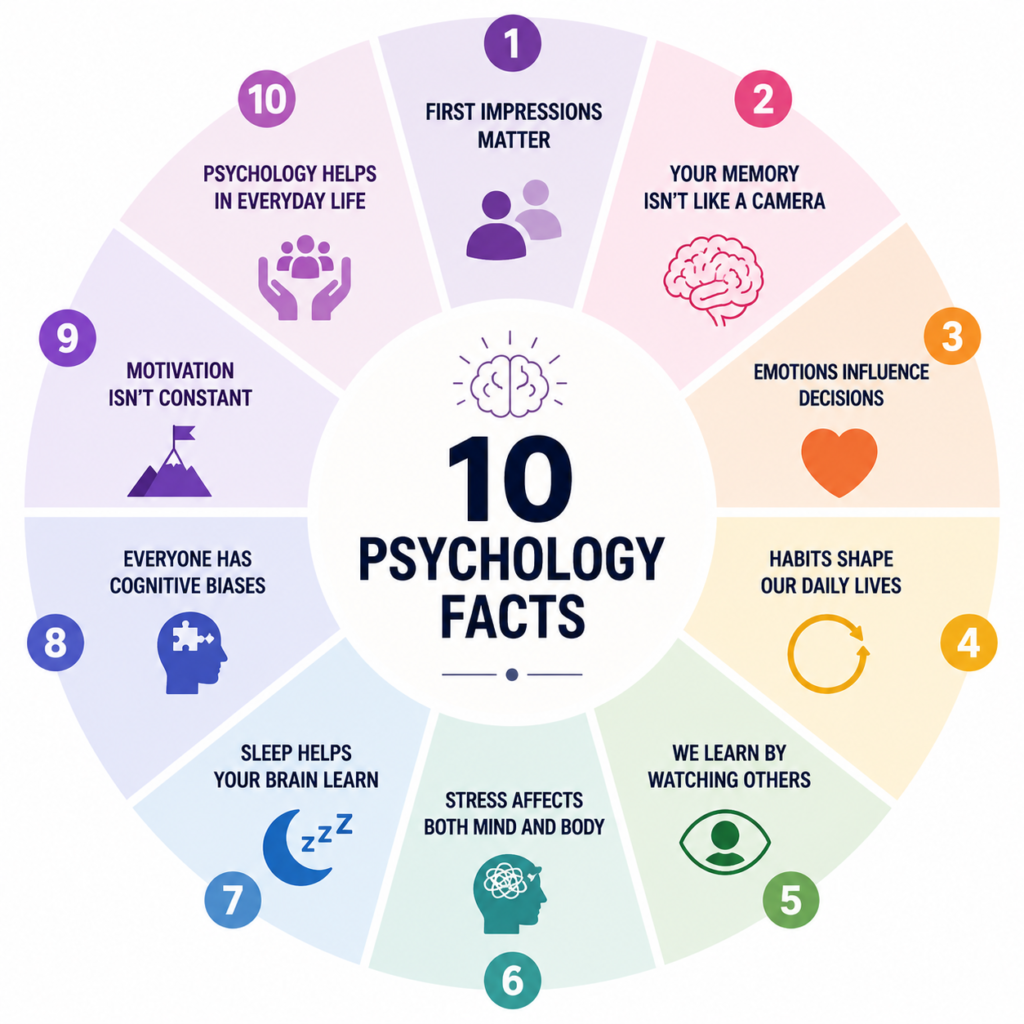
Psychology is everywhere. It influences how we think, make decisions, form relationships, and even remember our daily experiences. Many psychological principles are surprisingly simple, yet they explain behaviors we see every day. In this article, we’ll explore ten fascinating psychology facts that may change the way you understand yourself and the people around you.
1. First Impressions Matter
Research suggests that people often form an impression of someone within the first few seconds of meeting them. While these impressions aren’t always accurate, they can influence future interactions. Example: A warm smile and confident body language can make someone appear more approachable.
2. Your Memory Isn’t Like a Camera
Many people believe memories are stored exactly as events happen. In reality, memory is reconstructive, meaning our brains rebuild memories whenever we recall them. That’s why two people can remember the same event differently.
3. Emotions Influence Decisions
Even when we think we’re making purely logical decisions, emotions often play an important role. For example, excitement may encourage us to take risks, while fear may make us avoid certain situations.
4. Habits Shape Our Daily Lives
Many of our daily actions happen automatically because they’ve become habits. Building positive habits—like exercising or reading regularly—can improve well-being over time.
5. We Learn by Watching Others
According to observational learning, people often learn new behaviors simply by observing others. Children especially learn by watching parents, teachers, siblings, and friends.
6. Stress Affects Both Mind and Body
Short-term stress can help us stay focused, but long-term stress can affect concentration, sleep, physical health, and emotional well-being. Learning healthy ways to manage stress is important for overall health.
7. Sleep Helps Your Brain Learn
While we sleep, our brains process and organize information learned during the day. Getting enough sleep improves memory, attention, and problem-solving abilities.
8. Everyone Has Cognitive Biases
Our brains use mental shortcuts to make decisions quickly. These shortcuts are called cognitive biases. Although helpful, they can sometimes lead to errors in judgment.
9. Motivation Isn’t Constant
People often wait until they “feel motivated” to begin a task. In reality, taking the first small step often creates motivation rather than the other way around.
10. Psychology Helps in Everyday Life
Psychology isn’t only for therapists or researchers.
It can help us:
- Communicate more effectively
- Build healthier relationships
- Study more efficiently
- Manage stress
- Make informed decisions
- Understand ourselves better